
-
Bonde et trop-plein de baignoire en laiton Baril - REN-2018-27
Fournisseur :BarilPrix habituel À partir de $331.80Prix habituelPrix unitaire par$474.00Prix promotionnel À partir de $331.80Promotion -

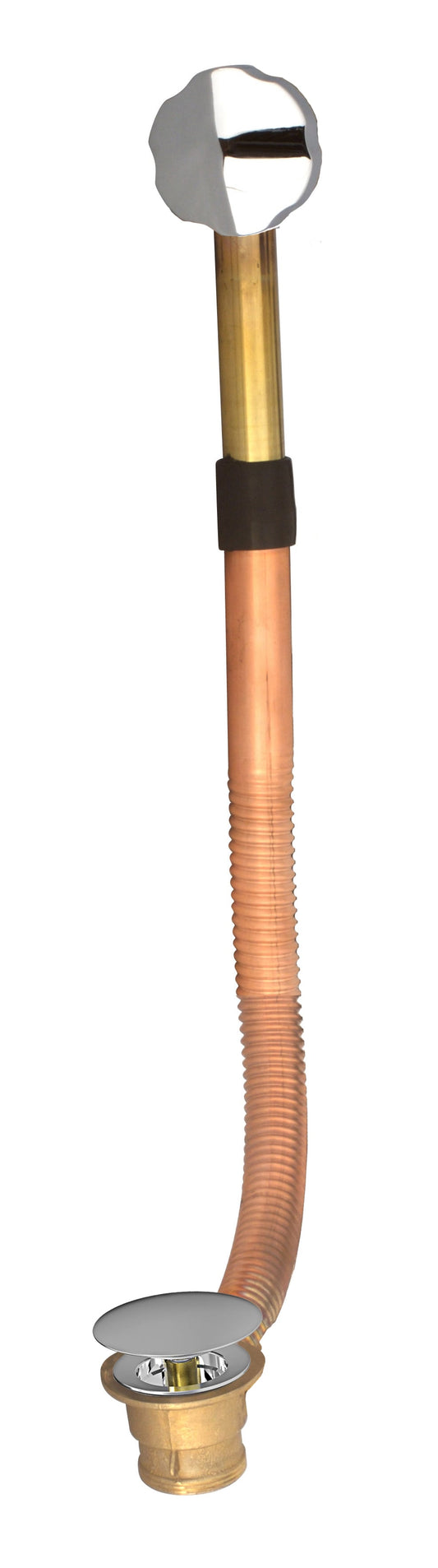
Baril 20 pouces Bonde de vidage et trop-plein pour baignoire, laiton, bouton-poussoir - REN-2008-14
Fournisseur :BarilPrix habituel À partir de $184.80Prix habituelPrix unitaire par$264.00Prix promotionnel À partir de $184.80Promotion -
Vidage et trop-plein en laiton pour baignoire Baril - REN-2007-10
Fournisseur :BarilPrix habituel À partir de $193.90Prix habituelPrix unitaire par$277.00Prix promotionnel À partir de $193.90Promotion


About this collection
Bathtub Drains & Waste and Overflow Kits
A bathtub drain is not one part. It is an assembly — the drain in the floor of the tub, the overflow plate up at the rim, and the piping that joins them behind the tub. Buy one piece and you usually discover you needed the set.
This is also the part most often ignored until the tub is installed, which is the wrong order. Once a tub is set and tiled to, changing the waste means pulling the tub.
What the parts are called
- Waste and overflow — the complete assembly. Drain body, overflow plate, and the connecting pipe. This is what you want if the tub is new.
- Drain body — the part you see in the bottom of the tub, with the stopper.
- Overflow plate — the cover at the high end of the tub that stops it from flooding. Some have a trip lever; some are blank.
- Stopper — the plug itself, which is the part that usually fails first and can often be replaced on its own.
Which stopper mechanism
- Push-button (pop-up) — press to close, press to open. The cleanest-looking and the most common on contemporary tubs.
- Toe-touch — same idea, operated with a foot. No lever on the overflow plate, so the end of the tub stays plain.
- Trip lever — a lever on the overflow plate operates a plunger inside the pipe. Traditional, and the one to choose if the tub already has a lever hole.
If you are replacing rather than building, match the mechanism you already have. Switching from trip lever to toe-touch means the existing overflow plate hole no longer has a lever in it.
Three things to check before ordering
- Material. Brass assemblies last; plastic ones are cheaper and are what most tubs ship with. If the tub is staying for twenty years, the drain should too.
- Length. Waste and overflow kits come in different lengths to suit the distance between the drain and the overflow. A standard tub and a long soaking tub are not the same. Measure before you order.
- Finish. The drain and overflow plate are visible. Match them to the tub filler, and buy both from the same brand where you can — finishes are not standardised between manufacturers.
Freestanding tubs are different
A freestanding tub usually needs a specific waste designed for it, often supplied by the tub manufacturer, because the drain has to reach down through the floor rather than across to a wall. Check what the tub takes before buying a standard kit — and if you are not sure, send us the tub model and we will confirm it.
Related
Bathroom sink drains & P-traps — lavatory pop-up and grid drains, a different part entirely. Also see Tub fillers, Installation Systems & Parts.
Buying from Eunoia
Over 3,000 of our products ship free anywhere in Canada; look for the free-shipping badge on the product page. Everything ships free within Ontario, and any order over $3,000 ships free Canada-wide. If you are unsure which waste your tub takes, send us the tub make and model and we will check it before you order.
Frequently asked questions
What is a waste and overflow?
The complete bathtub drain assembly — the drain in the base of the tub, the overflow plate near the rim, and the pipe connecting them. Sold as a set because the parts have to match.
What is the difference between a toe-touch and a push-button drain?
Only how you operate it. Toe-touch is pressed with a foot; push-button is pressed by hand. Both seal the same way, and neither needs a lever on the overflow plate.
Can I replace just the stopper?
Often yes — the stopper is usually the first part to wear, and replacement stoppers are sold separately. The rest of the assembly can stay in the wall.
Do I need a special drain for a freestanding tub?
Usually. A freestanding tub drains down through the floor, so it needs a waste made for that tub. Check the manufacturer's requirement rather than fitting a standard kit.
Brass or plastic?
Brass costs more and lasts longer, and the visible parts look like the rest of the bathroom rather than like a fitting. Plastic works, and is what most tubs ship with.
Plus de façons de magasiner