
The Perfect Shower: Renovation with Eunoia's Premium Fixtures
Share
The Perfect Shower: Renovation with Eunoia's Premium Fixtures
A shower is the one fixture in a bathroom you cannot easily change your mind about. Almost everything that matters is buried in the wall before the tile goes on. Get that part right and you can swap the visible pieces in fifteen years without touching a stud; get it wrong and you are opening the wall again.
So this guide starts where the decision actually starts — behind the tile — and works outward. Browse shower faucets & trims as you read. If you are planning the whole room, our guide to choosing bathroom fixtures sets out the order to work in.
1. The valve comes first
The rough-in valve is the brass body that mixes hot and cold inside the wall. Everything you see — handle, trim plate, head — attaches to it. There are two kinds, and the choice is worth understanding:
- Pressure balance. Keeps the temperature steady when someone flushes a toilet elsewhere in the house, by matching the pressure drop on both sides. One handle controls volume and temperature together. This is the standard, code-compliant choice for most bathrooms.
- Thermostatic. Holds a temperature you set, independent of pressure and supply changes, with a separate volume control. It is the better experience — you set 40°C once and it stays there — and it is what you need if you want to run a rain head and a hand shower at the same time, because each outlet gets its own volume control.
The other question is how many outlets the valve serves. A rain head plus a hand shower is two; add body jets and you are at three or four, which needs a valve and a supply capable of feeding them. Decide this before the plumber roughs in — it cannot be added later.
See shower rough-in valves & parts.
2. Then the heads
Rain shower heads
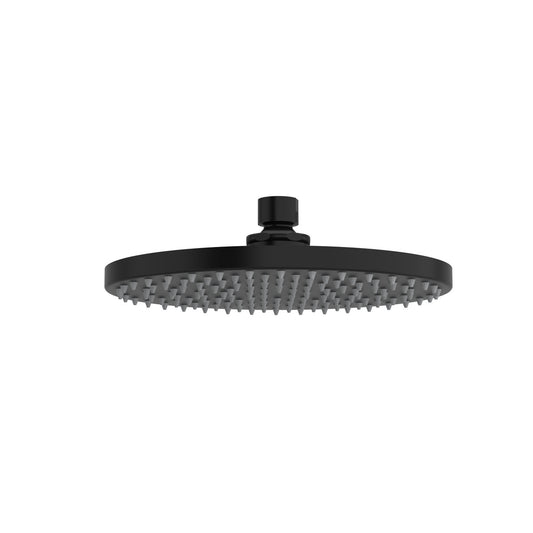
Large-diameter heads that produce a soft, wide, enveloping spray. They feel luxurious and they are gentler on the skin — but they need adequate flow to cover their own area, and they are poor at rinsing shampoo out of long hair on their own. Pair one with a hand shower.
Ceiling-mounted heads
The most dramatic option: water falls straight down rather than at an angle. It requires ceiling access during the rough-in, and it means you cannot stand outside the spray to adjust the temperature — which is a real argument for a thermostatic valve.
Handheld shower heads
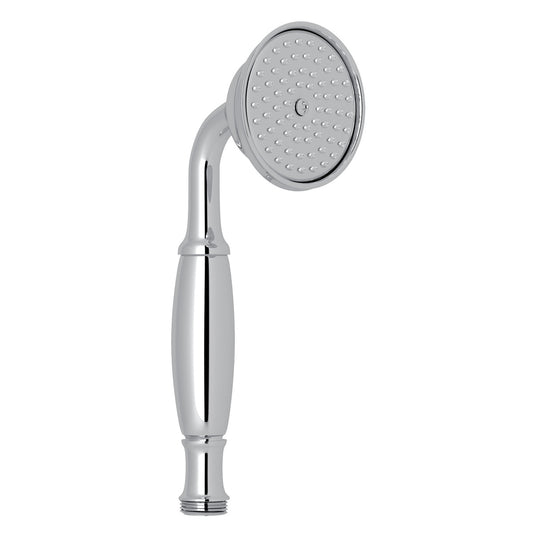
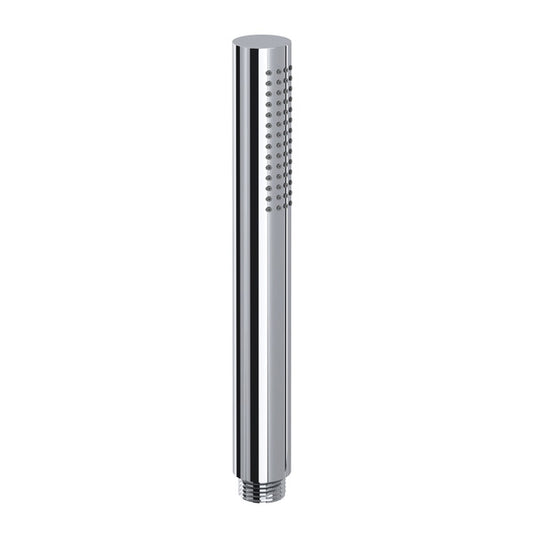
The most useful fixture in any shower. Essential for rinsing the enclosure, washing children or pets, and for anyone with limited mobility. If you install only one thing, install this.
Combination systems
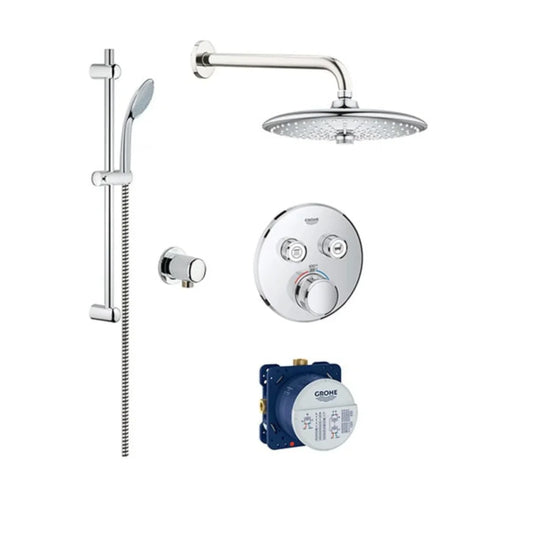
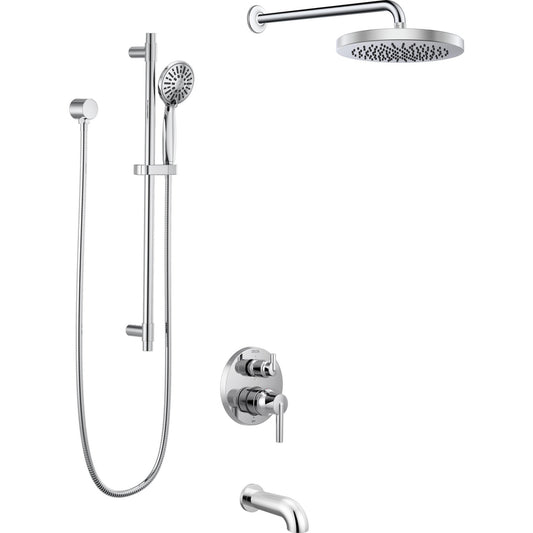
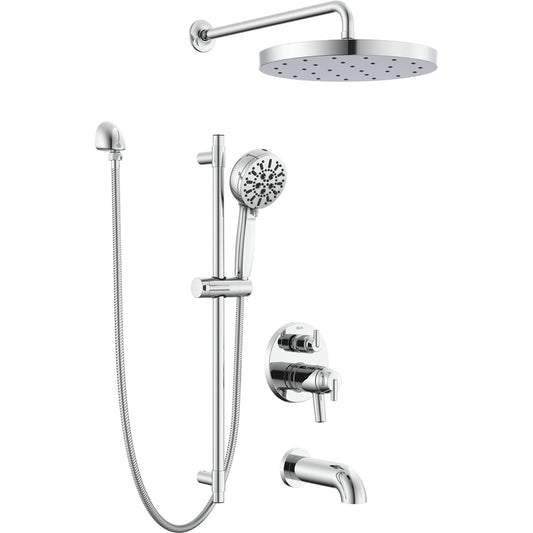
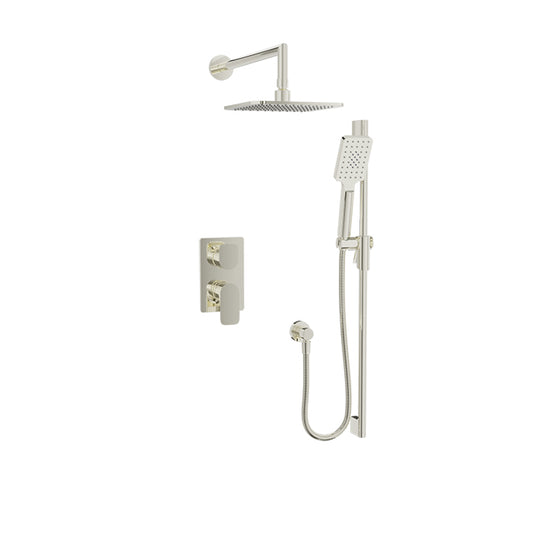
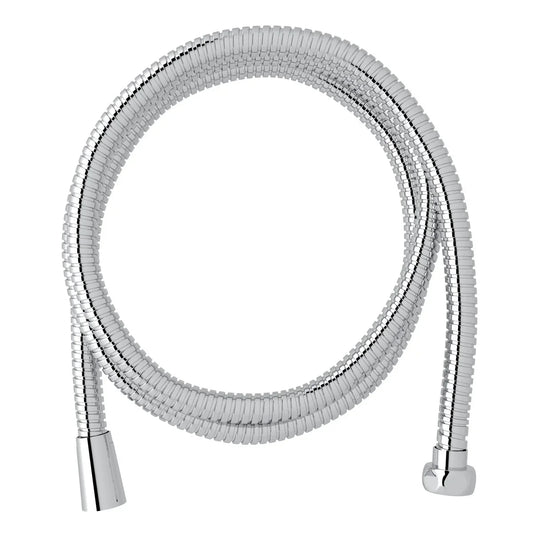
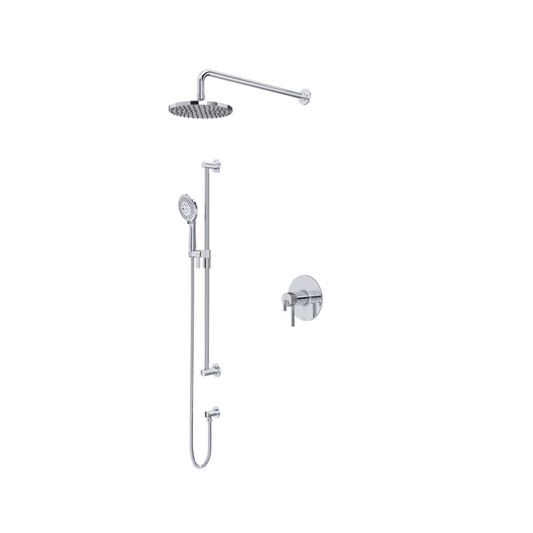
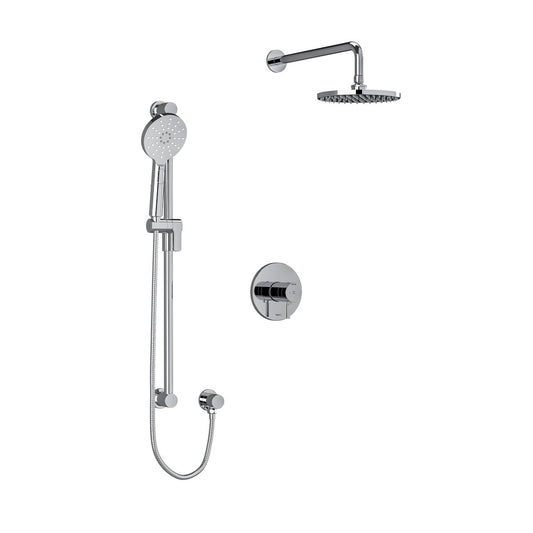
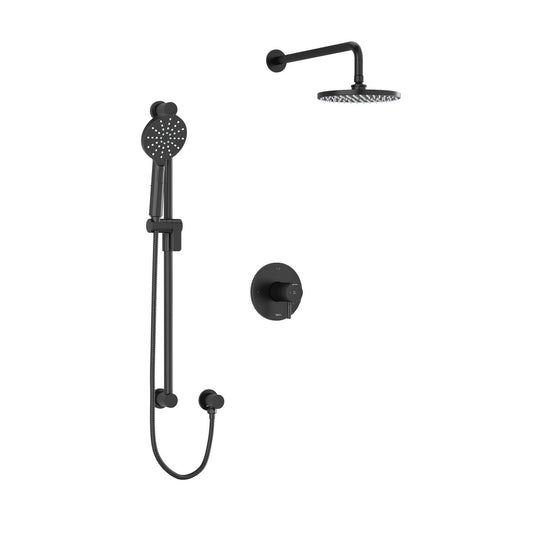
A rain head plus a hand shower on a diverter is the configuration most people end up happiest with. Our complete shower kits pair the head, valve and trim as a matched set, which removes the risk of a compatibility mistake.
3. What else to check
- Flow rate. Canadian fixtures are typically 1.75–2.5 GPM. A lower rate is not automatically worse — nozzle design matters more than volume — but a large rain head at a low flow rate will feel weak.
- Your supply. Older homes with ½" supply lines cannot feed a multi-outlet system properly. Confirm this with your plumber before you specify one.
- Finish. Match it to the rest of the bathroom, and buy the visible metal from one brand where you can — one manufacturer's brushed nickel is not another's.
- Drain. Easy to forget until the end. See shower drains.
4. Matching the room to the shower
A primary bathroom justifies a thermostatic valve, a rain head and a hand shower. A guest bathroom or a second bath rarely does — a good pressure-balance valve with a quality hand shower gives most of the benefit for a fraction of the cost and complexity.
If you are going further, steam shower generators and steam heads turn the enclosure into a steam room, which is a plumbing and enclosure decision as much as a fixture one.
5. Replacing trim on an existing valve
If your valve is sound and you only want the look to change, you may be able to replace the trim alone — the handle and escutcheon — without opening the wall. Trim is generally brand- and series-specific, so identify the valve first. See shower faucet parts & trim kits.
Brands we carry
Our shower range is led by Baril, Riobel, Delta and Brizo, alongside ROHL, Perrin & Rowe and Vogt.
Worth reading before you commit to one: the Riobel Arca collection and why Vogt is a top choice in Canada.
Where to start
If you are renovating, start at shower rough-in valves & parts and work outward. If you are replacing like for like, start at shower kits. Everything else lives under shower faucets & trims.
Send us a photo of your existing valve and we will tell you what trim fits it. And if the sink is being replaced at the same time, see the bathroom faucet guide — hole count and spacing decide that one.